Teslaformer Rehabilitation in London
Recovery-focused Functional Magnetic Stimulation for muscles, nerves, spasms, injuries and neuromuscular control.
Teslaformer Rehabilitation at BeautyGene Clinic supports muscle activation, pain modulation, neuromuscular communication and functional movement after injury, neurological conditions, sports trauma or chronic protective tension.
Not an aesthetic Teslaformer protocol
Aesthetic Teslaformer protocols are usually focused on visible muscle contractions, body sculpting, strengthening and body contour refinement. Teslaformer Rehabilitation works differently.
In rehabilitation-focused protocols, the goal is not to "train" the body like a workout. The settings are selected to support neuromuscular response, muscle tone balance, pain modulation, movement recovery and tissue healing conditions.
Depending on the case, the session may feel softer, more controlled and more therapeutic than an aesthetic Teslaformer treatment. The intensity is adapted to the person, the condition, the stage of recovery and any medical restrictions.
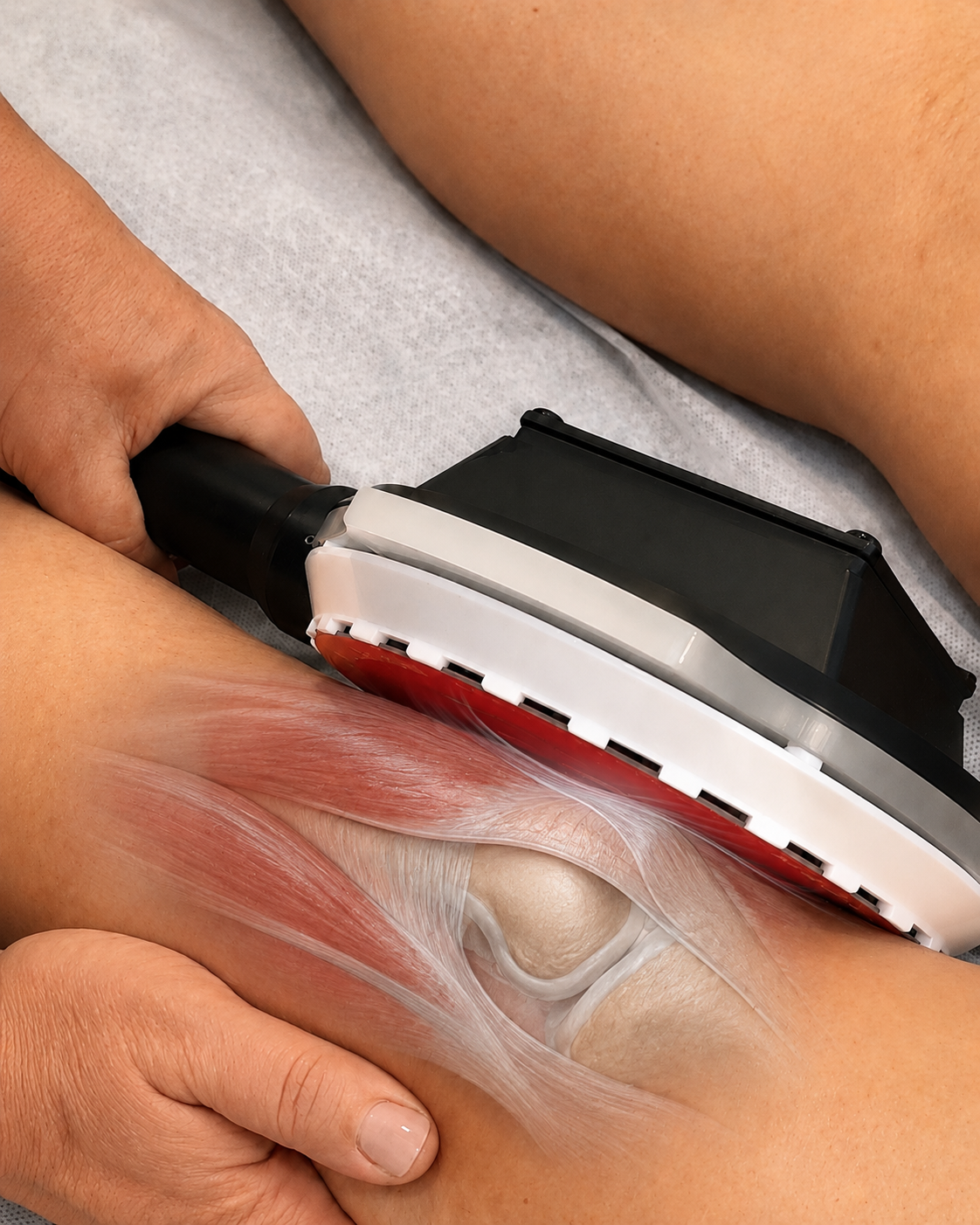
How magnetic stimulation supports recovery
Teslaformer uses Functional Magnetic Stimulation to create a controlled magnetic field. In rehabilitation protocols, this field works with the neuromuscular system rather than creating strong aesthetic contractions. It can pass through clothing and soft tissue to stimulate peripheral nerves and the muscle fibres connected to them, supporting muscle activation, relaxation of overactive areas and better movement control.
May help improve how peripheral nerves communicate with affected muscles after injury, immobilisation or neurological disturbance.
May influence nerve signalling and protective tension, helping reduce the pain–spasm–restriction cycle.
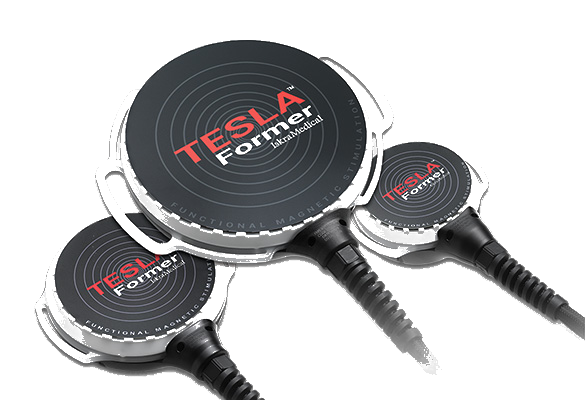
May help calm overactive muscles or gently activate weaker areas depending on the recovery goal.
May support circulation, movement tolerance and tissue activity, creating better conditions for natural recovery.
What Teslaformer Rehabilitation can support
Teslaformer Rehabilitation may be used as part of a recovery pathway for conditions involving muscles, nerves, fascia, ligaments, pain, spasm, restricted movement or reduced neuromuscular control.
Support for muscle trauma, partial tears, overload and weakness after injury.
A gentle approach for strain, tension, restricted movement or soft tissue overload.
Support once the bone is stable and medical clearance has been given.
May support tone regulation, movement control and neuromuscular activation within a wider plan.
For selected sports injuries, overuse patterns, imbalance and return-to-movement support.
Considered after impact injuries or long periods of restricted mobility, depending on status.
Selected cases where nerve irritation contributes to pain, spasm or movement limitation.
Support for tone imbalance, spastic discomfort and restricted movement patterns.
Support for muscle trauma, partial tears, overload and weakness after injury.
A gentle approach for strain, tension, restricted movement or soft tissue overload.
Support once the bone is stable and medical clearance has been given.
May support tone regulation, movement control and neuromuscular activation within a wider plan.
For selected sports injuries, overuse patterns, imbalance and return-to-movement support.
Considered after impact injuries or long periods of restricted mobility, depending on status.
Selected cases where nerve irritation contributes to pain, spasm or movement limitation.
Support for tone imbalance, spastic discomfort and restricted movement patterns.
What results may be noticed
Results depend on the condition, stage of recovery, medical history and individual response. For some, the first changes are felt as reduced tension or easier movement; for others, progress builds gradually through a course.
May support recovery by improving activation, reducing protective tension and encouraging better movement.
May help the nervous system and muscles communicate more efficiently after trauma, stroke or chronic pain.
May reduce the pain–spasm–restriction cycle in selected cases.
May help calm excessive tone and allow easier movement.
May support circulation, tissue activity and movement tolerance.
As pain and guarding reduce, movement may feel safer and easier.
Working with nerves, pain and spastic patterns
Pain is not only a signal from injured tissue. It is also influenced by the nervous system, muscle guarding, inflammation, fear of movement, circulation and long-term protective patterns. Teslaformer Rehabilitation works with the neuromuscular system — the magnetic field may stimulate peripheral nerves, which then communicate with connected muscle fibres to help activate weak muscles, relax overactive muscles, reduce spasm or improve movement control.
Areas and structures we may work with
The treatment area, intensity and protocol are selected individually after assessment.
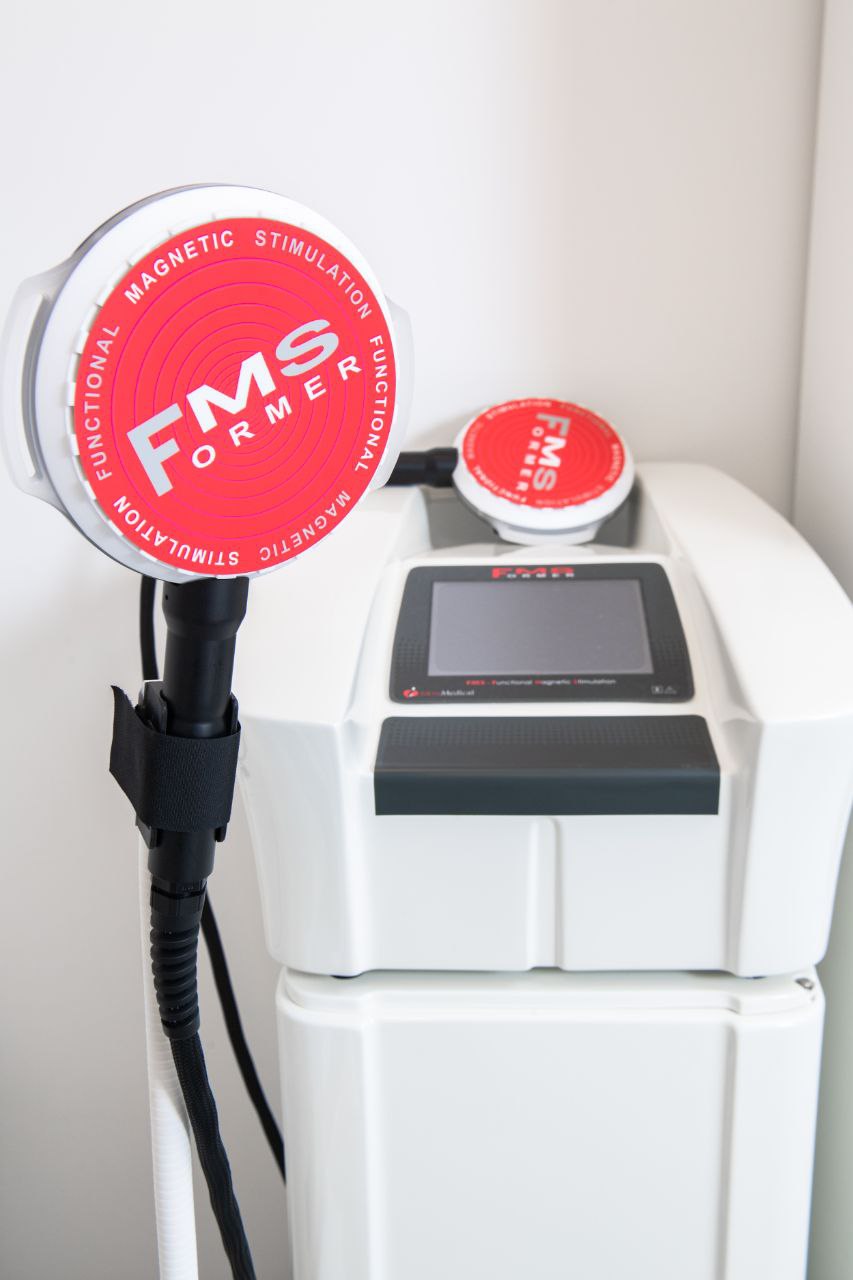
How the session works
We review your medical history, injury background, pain level, sensitivity, movement limitations, contraindications and recovery goals.
The specialist selects the area, intensity, duration and stimulation pattern based on whether the aim is pain modulation, tone regulation, activation or recovery support.
The treatment is performed without aggressive loading. Sensations may feel pulsing, relaxing, activating or rhythmic depending on the protocol.
We monitor changes in tension, comfort, movement, pain levels and functional confidence to adjust the course safely.
Teslaformer Rehabilitation pricing
Each Teslaformer Rehabilitation session is 20 minutes, selected individually depending on the area, recovery stage, sensitivity and medical history.
A first 20-minute session to assess comfort, response and suitability.
A 20-minute Teslaformer Rehabilitation add-on within the same recovery visit.
A dedicated 20-minute rehabilitation-focused Teslaformer session.
Teslaformer can be combined with Manual Body Therapy
In selected cases, the strongest recovery pathway combines Teslaformer Rehabilitation with hands-on Manual Body Therapy.
Manual Body Therapy helps assess tissue tension, pelvic balance, posture, feet, compensations and areas of guarding. Teslaformer may then be used to support neuromuscular activation, pain modulation, spasm reduction and movement recovery.
Safety, suitability and medical clearance
Teslaformer Rehabilitation is a supportive recovery treatment. It does not replace medical diagnosis, emergency treatment, neurology, orthopaedic care, physiotherapy, surgery or medication.
Frequently Asked Questions
Is Teslaformer Rehabilitation the same as aesthetic Teslaformer?
Will my muscles contract strongly during rehabilitation?
How long is a Teslaformer Rehabilitation session?
How much is a trial session?
How much is it when combined with an osteopath appointment?
How much is a standalone session?
Can Teslaformer help after stroke?
Can it be used after fractures?
Can it help with neuralgia or neuritis?
Can it help with muscle spasms or spasticity?
How many sessions will I need?
Is it painful?
Book Teslaformer Rehabilitation Consultation
Start with a 20-minute Teslaformer Rehabilitation trial session or book a combined recovery appointment at BeautyGene Clinic in Vauxhall, London. We will assess your recovery goals, medical history, symptoms and suitability before selecting a safe rehabilitation-focused protocol.