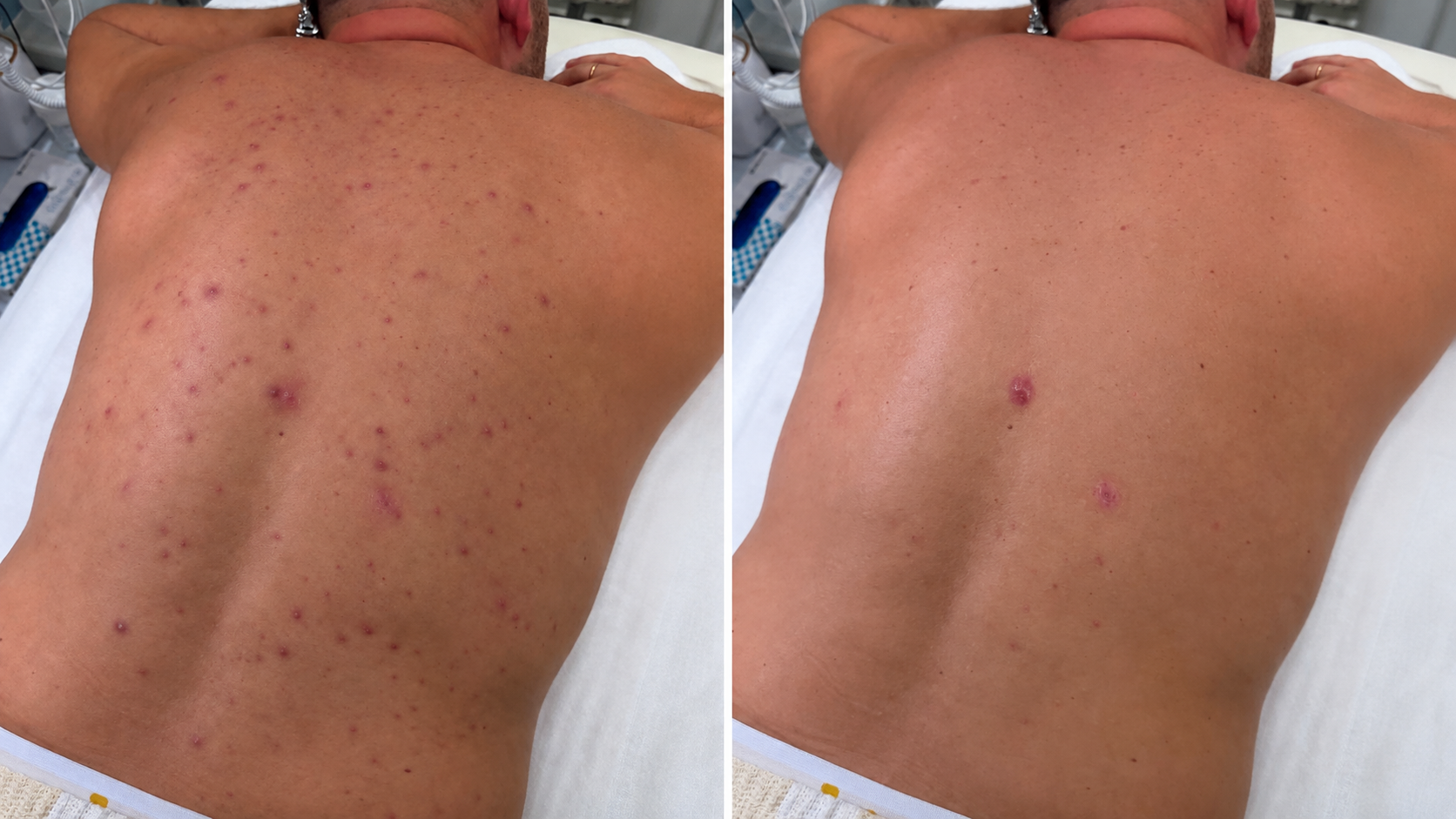
Diagnosis: IT Back
8–10 hours in front of a laptop. Small bumps, closed comedones, inflammation across the back.
The worst thing about "IT back" is that you can go for months without realising how much your skin has changed. You see your face in the morning, in the evening, in the mirror. Your back? Usually in a random photo. And suddenly you notice dozens of tiny comedones, red breakouts, marks and uneven texture.
No, Your Computer Doesn't Cause Acne
But look at what often comes with this kind of lifestyle: long hours sitting down, tight clothing, your back pressed against a chair for hours, sweat, a backpack.
A working day often looks the same: 8–10 hours with your back pressed against a chair, heat, sweat, friction, a fitted T-shirt. Then a backpack. Maybe the gym. And a few more hours in the same clothes. These conditions can create a favourable environment for bacteria to multiply.
At First, It Doesn't Even Look Like Acne
The skin simply starts to feel uneven and rough. Then closed comedones appear. Blackheads. Uneven texture. Only later do some of them become inflamed. That's usually when people finally start paying attention to their back.
The problem can exist long before it starts to look like what we typically think of as "acne".
A Rougher Loofah Won't Fix the Problem
And aggressively drying out the skin isn't the answer either. Trying to scrub the back harder or dry the skin out as much as possible can simply give the skin another problem to deal with.
At BeautyGene, our cosmetologist regularly works with these types of skin concerns and knows how to address them in practice.
A Professional Back Cleansing Is a Multi-Step Process
Cleansing and preparation
We start by cleansing and preparing the skin.
Extraction under magnification
This is followed by ultrasonic and manual extraction under magnification, allowing the cosmetologist to work precisely on comedones and congested pores.
Soothing and restoration
Then we apply soothing and restorative masks.
Homecare review
Finally, we review your homecare routine: what to keep, what to remove, and what could be contributing to recurring breakouts between treatments.
Acne Doesn't Really Care Where You Work
But repetitive conditions do matter. And office life can create the same conditions five days a week.
That's why, with persistent breakouts, we don't only look at what is already on the skin. We also try to understand what keeps triggering the problem again and again.